


Why Choose a Concrete Pool?
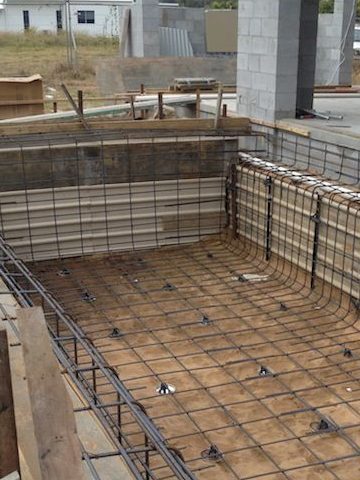
- Custom Design Freedom: Create unlimited shapes/sizes (ideal for infinity edges, beach entries, or lap pools)
- Durability: 30+ year lifespan with proper maintenance vs. 10-15 years for vinyl liners
- Resale Value: Increases property value by 5-7% in most U.S. markets (Zillow 2023 data)
5 Risks You Can’t Ignore
- Permitting Nightmares: 68% of DIYers face delays due to zoning violations (link to local government portal)
- Structural Failures: 6″ concrete thickness required – 92% of DIY pools under 4″ crack within 2 years
- Cost Overruns: Average 32% budget excess from rework (2023 HomeAdvisor survey)
- Equipment Errors: Improper plumbing causes 45% of circulation failures
- Safety Hazards: Unbonded pools risk electrocution – NEC Article 680 compliance checklist
Step-by-Step Construction Blueprint
Phase 1: Pre-Construction (3-4 Weeks)
Materials Checklist:
✓ Gunite/Shotcrete (PSI 4,500+ recommended)
✓ #3 Rebar (6″ grid pattern)
✓ NSF/ANSI 50-certified plumbing kit
✓ Waterproofing membrane (Henry 587 or equivalent)
Site Preparation:
① Call 811 for utility marking (link to USA’s Call 811 map)
② Calculate excavation volume: (Length x Width x Depth) ÷ 27 = Cubic yards
③ Soil testing: Expansive clay soils require 12″ gravel base
Phase 2: Core Construction (8-12 Weeks)
1.Rebar Framework:
- Bend bars at 135° angles for corners (ASTM A615 standards)
- Use 6″ plastic chairs to maintain cover depth
2.Plumbing Layout:
- Position skimmer 12-18″ below coping
- Install 3 drains minimum (VGB-compliant covers)
- Pressure test at 20 PSI for 24 hours
3.Concrete Application:
- Gunite (dry mix): Requires 750 CFM compressor
- Shotcrete (wet mix): Less rebound, better for DIY
- Cure at 70°F (21°C): Mist 5x/day for 28 days
4.Waterproofing:
- Roll-on elastomeric coating (2 coats, 24-hour drying)
- Flood test: Fill 12″ deep, mark water level, check 48h
Phase 3: Finishing (2-4 Weeks)
- Tile & Coping:
- ANSI A137.1-rated pool tile (COF ≥ 0.60 wet)
- Cantilevered concrete coping: 18−18−25/LF installed
- Deck Options:MaterialCost/SFDurabilityStamped Concrete8−8−1215+ yearsTravertine15−15−3025+ yearsComposite Decking6−6−1012-18 years
2024 Cost Breakdown (USD) [H2]
| Item | DIY Cost | Contractor | Savings |
|---|---|---|---|
| Excavation | $2,800 | $5,500 | 49% |
| Gunite (40 yd³) | $9,600 | $14,400 | 33% |
| Plumbing/Electrical | $3,200 | $6,800 | 53% |
| Tile/Coping (120 LF) | $4,500 | $9,000 | 50% |
| Total (14’x28′) | $24,100 | $42,700 | 44% |
Excludes permits (800−800−2,000) and equipment rentals ($1,200/month)
Critical Maintenance Guide
Weekly:
- Brush walls with stainless steel brush (nylon wears plaster)
- Test water: Maintain 7.4-7.6 pH, 100-150 ppm alkalinity
Annual:
- Acid wash: 3:1 water-muriatic acid mix (NEVER reverse)
- Inspect cracks: Use dye penetrant kit ($45 at Home Depot)
Every 10 Years:
- Replaster: 4.50−4.50−6.50/SF (quartz aggregate recommended)
FAQs (Schema Ready)
Q: Can I use quikrete for a swimming pool?
A: No – Standard concrete lacks compressive strength. Use NSF-certified pool plaster or gunite.
Q: How deep can a DIY concrete pool be?
A: Maximum 8′ without engineered plans. Deeper pools require retaining walls and OSHA trench boxes.
Q: Does homeowners insurance cover DIY pools?
A: Only if permitted and inspected. State Farm requires 4′ fencing with self-latching gates.
